

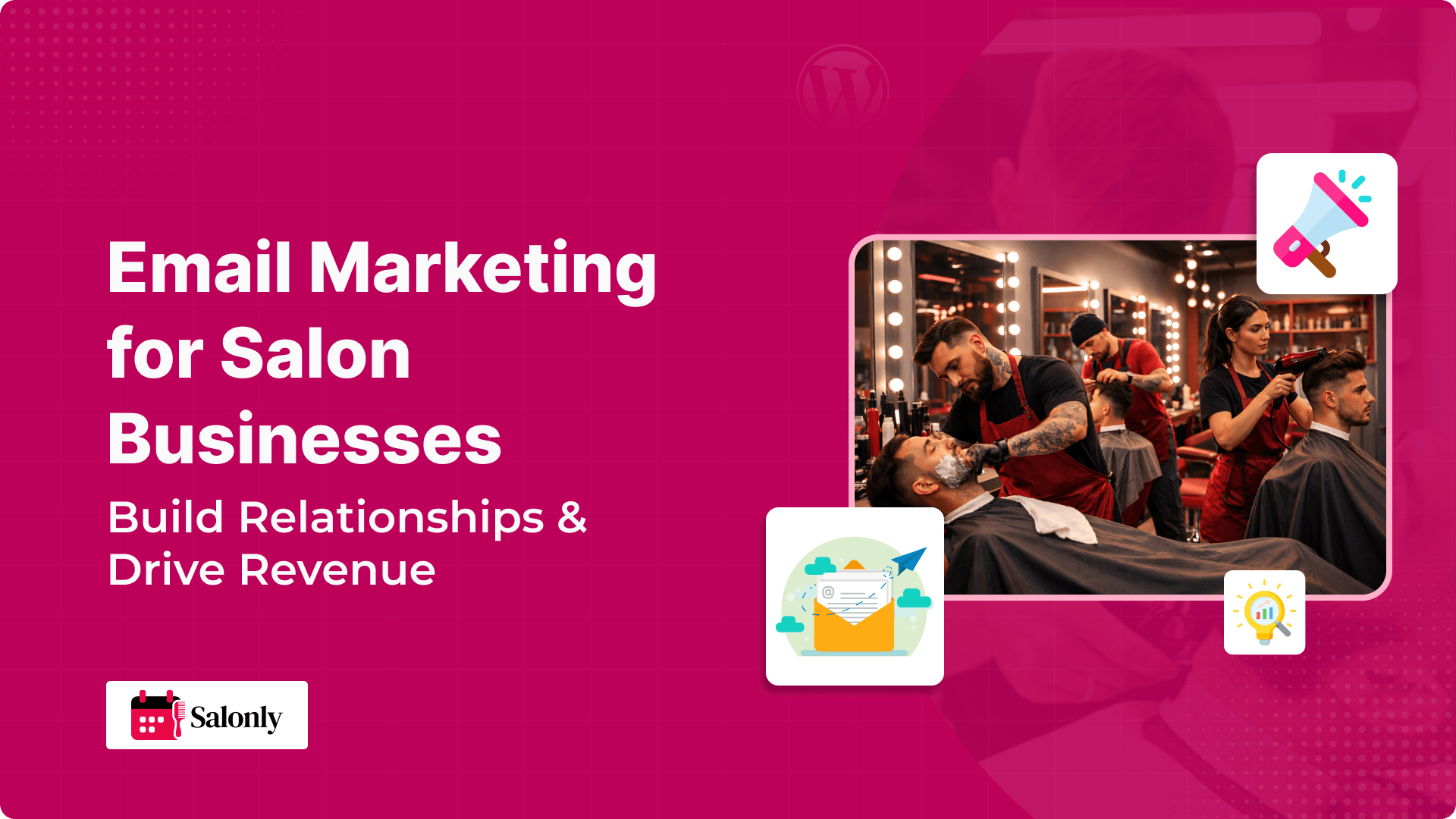
Email marketing for salon businesses remains one of the most reliable ways to turn one-time visitors into loyal clients. While social media helps with discovery, email builds relationships, drives repeat bookings, and increases lifetime value.
The numbers prove it. According to HubSpot and Forbes-backed research, email marketing delivers an average return of $36–$38 for every $1 spent, making it one of the highest ROI marketing channels available. At the same time, there are over 4.48 billion email users globally, and studies show 99% of people check their email daily.
For salons, this means one thing: your clients are already in their inbox, and you have a direct line to reach them without relying on algorithms.
In this guide, you will learn how to build a high-quality salon email list, create engaging campaigns, automate your marketing, and turn emails into consistent bookings and revenue.
Why Email Marketing Still Matters for Salons
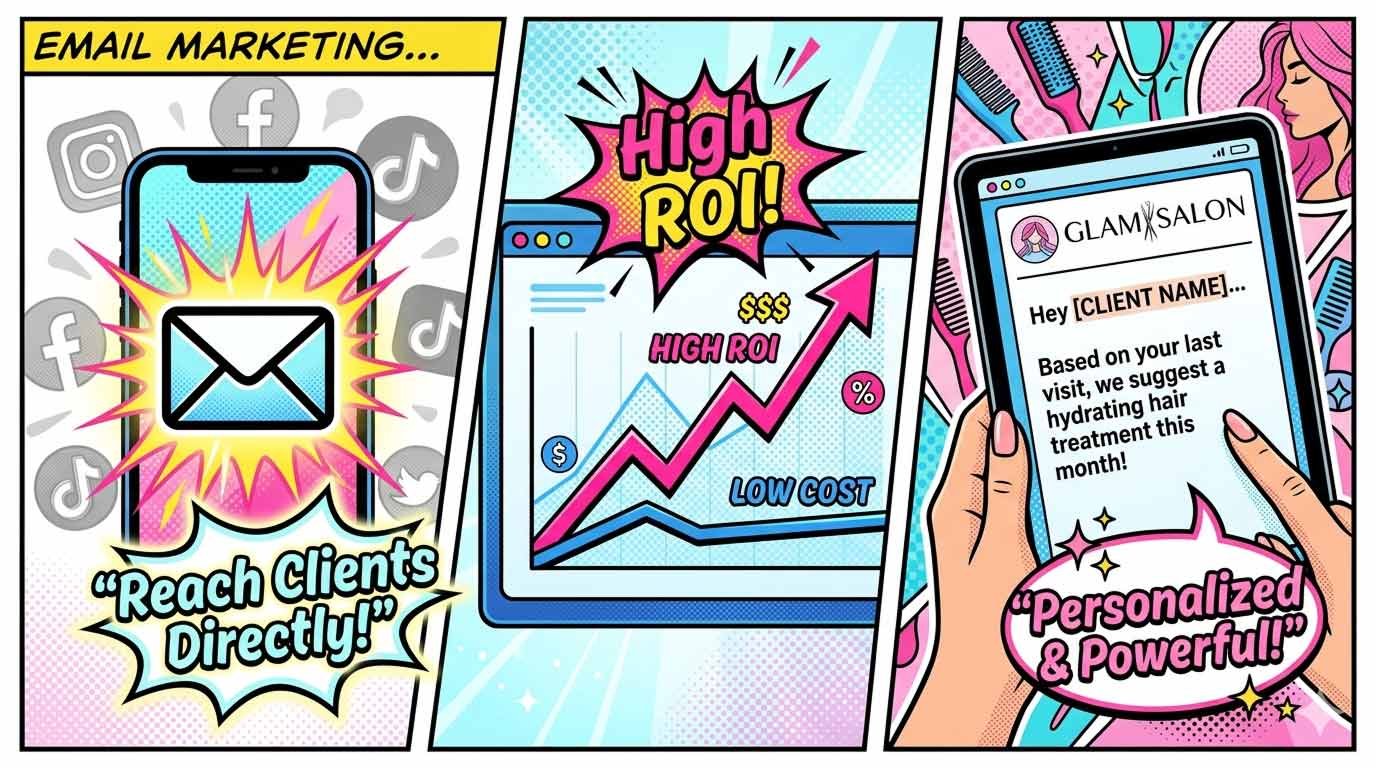
Despite the rise of Instagram, TikTok, and SMS marketing, email continues to outperform most channels when it comes to retention and ROI.
First, email offers unmatched reach. With billions of active users worldwide, it is the most universal digital channel available. Unlike social platforms, where organic reach is limited, email allows you to reach your audience directly.
Second, email is cost-effective. You can send thousands of emails at a fraction of the cost of paid ads. Combined with its high ROI, this makes it ideal for small and mid-sized salons.
Third, email enables deep personalization. You can tailor messages based on services booked, visit frequency, and customer preferences. This level of targeting is difficult to achieve with social media alone.
Fourth, email gives you ownership and control. Your email list is an asset. You are not dependent on platform algorithms or rising ad costs.
Finally, email is conversion-focused. Unlike social content that entertains, email is designed to drive action such as booking appointments, redeeming offers, or purchasing products.
Comparing Email vs. Social & SMS
| Channel | Strength | Limitation | Best Use |
| High ROI, personalization, owned audience | Lower urgency than SMS | Promotions, rebooking, loyalty | |
| Social Media | Discovery, visual content | Low organic reach | Brand awareness |
| SMS | Very high open rates | Limited content, higher cost | Reminders, urgent offers |
Email sits in the middle. It is more detailed than SMS and more conversion-focused than social media, making it essential for salon growth.
Building a Quality Salon Email List
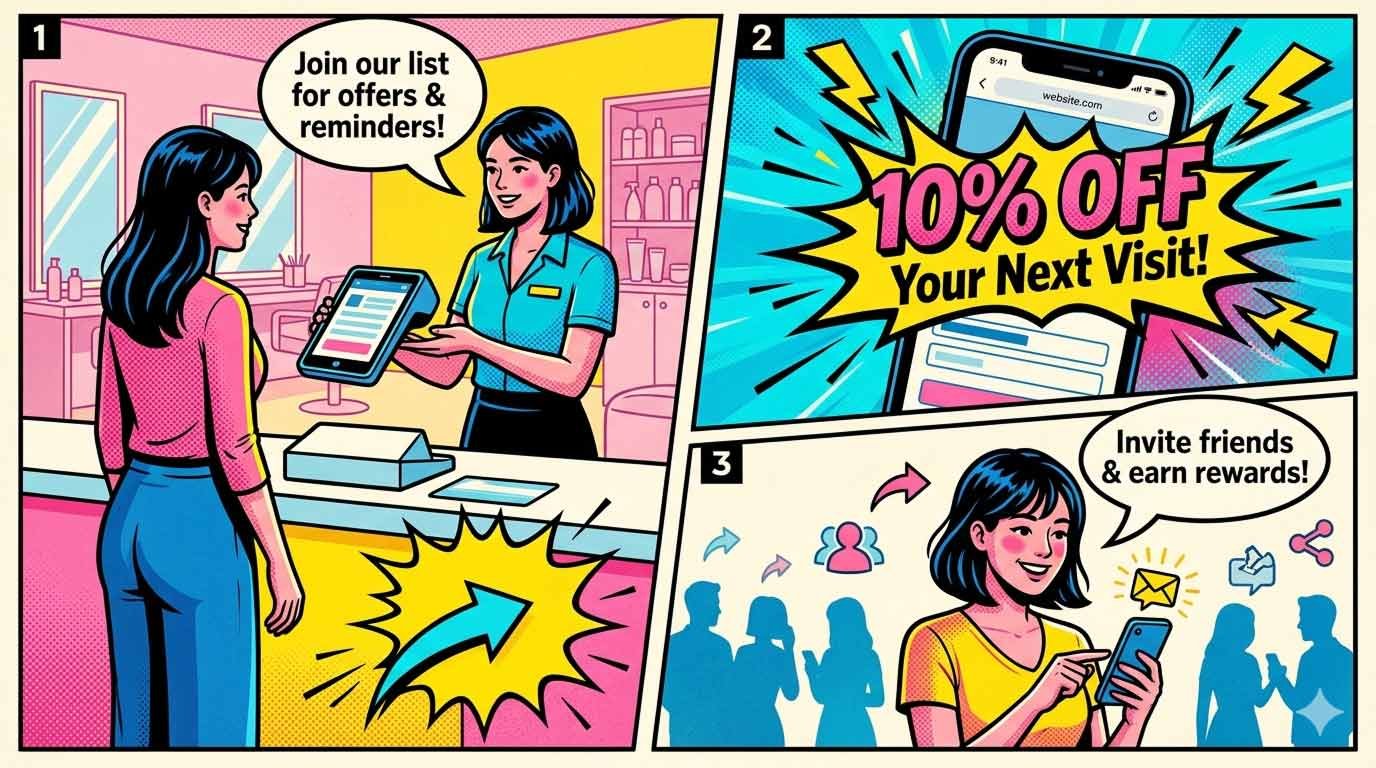
A strong email strategy starts with a high-quality, permission-based list. Avoid shortcuts like buying email lists, as they harm deliverability and trust.
Instead, focus on these proven methods:
1. In-salon sign-ups: Ask clients during checkout if they want offers or reminders. Use tablets or POS systems to collect consent.
2. Website and booking forms: Add simple opt-in forms on your website and booking pages. Offer incentives like discounts or free consultations.
3. Social media promotion: Promote your email list on Instagram and Facebook. Use lead magnets like “10% off your next visit.”
4. Referral incentives: Encourage clients to refer friends. Reward both with discounts or loyalty points.
5. Booking system integration: Tools like Mindbody, Meevo, Salonly, or similar platforms can automatically collect emails during appointments.
The key is explicit consent and clear value. Clients should know what they will receive and why it benefits them.
Segmentation Strategies for Salons
Segmentation improves engagement and revenue by sending relevant emails to the right audience.
Based on industry best practices and platforms like Yocale, salons can segment clients by
- Service type: Haircuts, coloring, spa, nails, massage
- Visit frequency: Regular, occasional, inactive clients
- Spending behavior: VIP clients vs budget customers
- Demographics: Age, lifestyle, location
For example, clients who booked hair coloring 4–6 weeks ago can receive a rebooking reminder, while spa clients can get wellness promotions.
Segmentation ensures your emails feel personal, not generic.
Designing High-Engagement Salon Emails
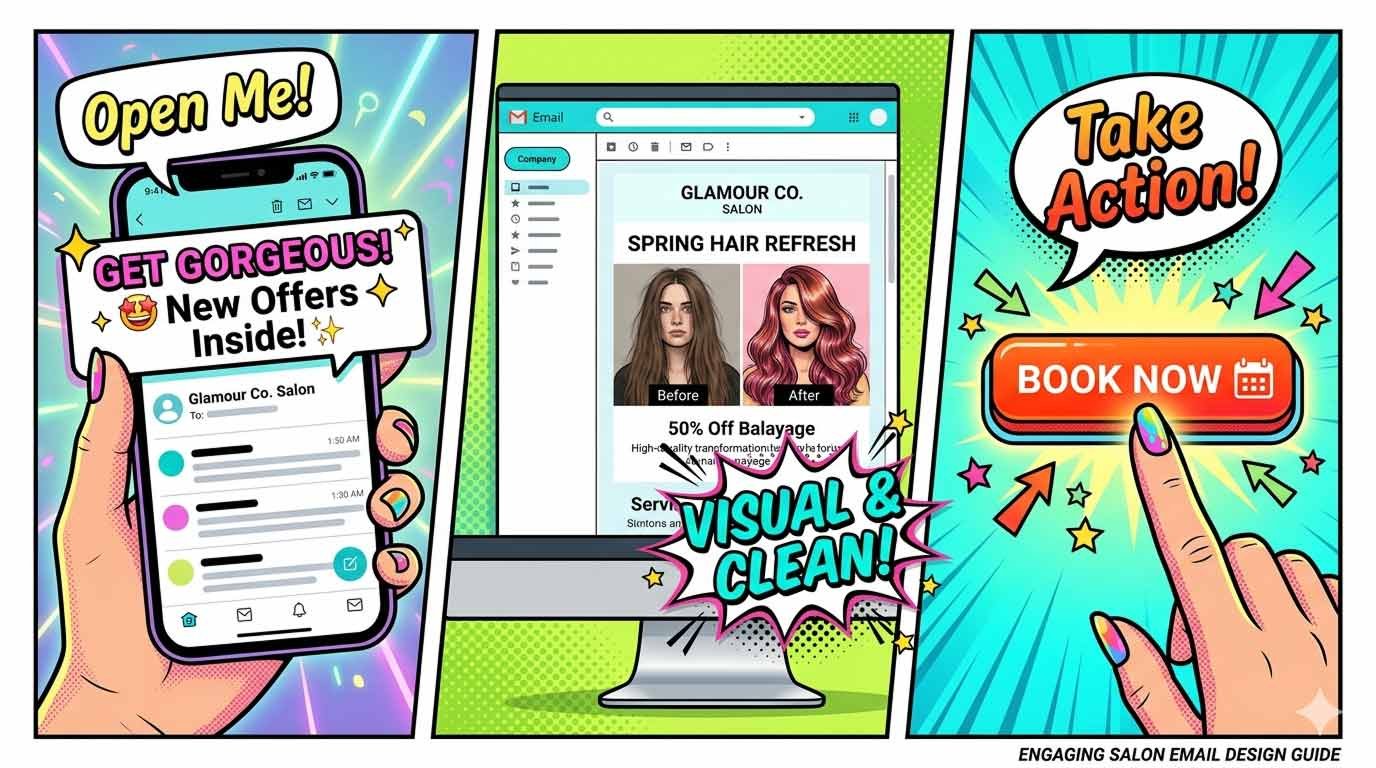
Your email design determines whether clients open, read, and take action.
Start with clear and compelling subject lines. They should be short, relevant, and benefit-driven.
Next, focus on visual appeal. Salons are visual businesses, so your emails should showcase transformations, styles, and ambiance.
Use clean layouts with:
- Short paragraphs
- High-quality images
- Clear call-to-action buttons
Finally, personalize your emails using client data. Address clients by name, recommend services, and send relevant offers.
Subject Line & Preview Text Best Practices
- Keep subject lines under 50 characters
- Use action words like “book,” “save,” or “claim.”
- Add urgency or benefits
- Personalise when possible
Example:
“Sarah, Your Hair Refresh is Due.”
Email Layout & Visual Branding
- Use before-and-after images or service highlights
- Add a clear CTA like “Book Now.”
- Ensure mobile-friendly design
- Stick to your brand colors and fonts
Most emails are opened on mobile, so simplicity is key.
Personalization & Dynamic Content
Personalization increases engagement significantly.
Use:
- Past service history
- Appointment timing
- Birthdays and milestones
- Product preferences
Examples:
- After-care tips after a treatment
- Birthday discounts
- Product recommendations
Platforms like Klaviyo emphasize after-care flows, which build trust and encourage repeat visits.
Automating Your Salon Email Marketing
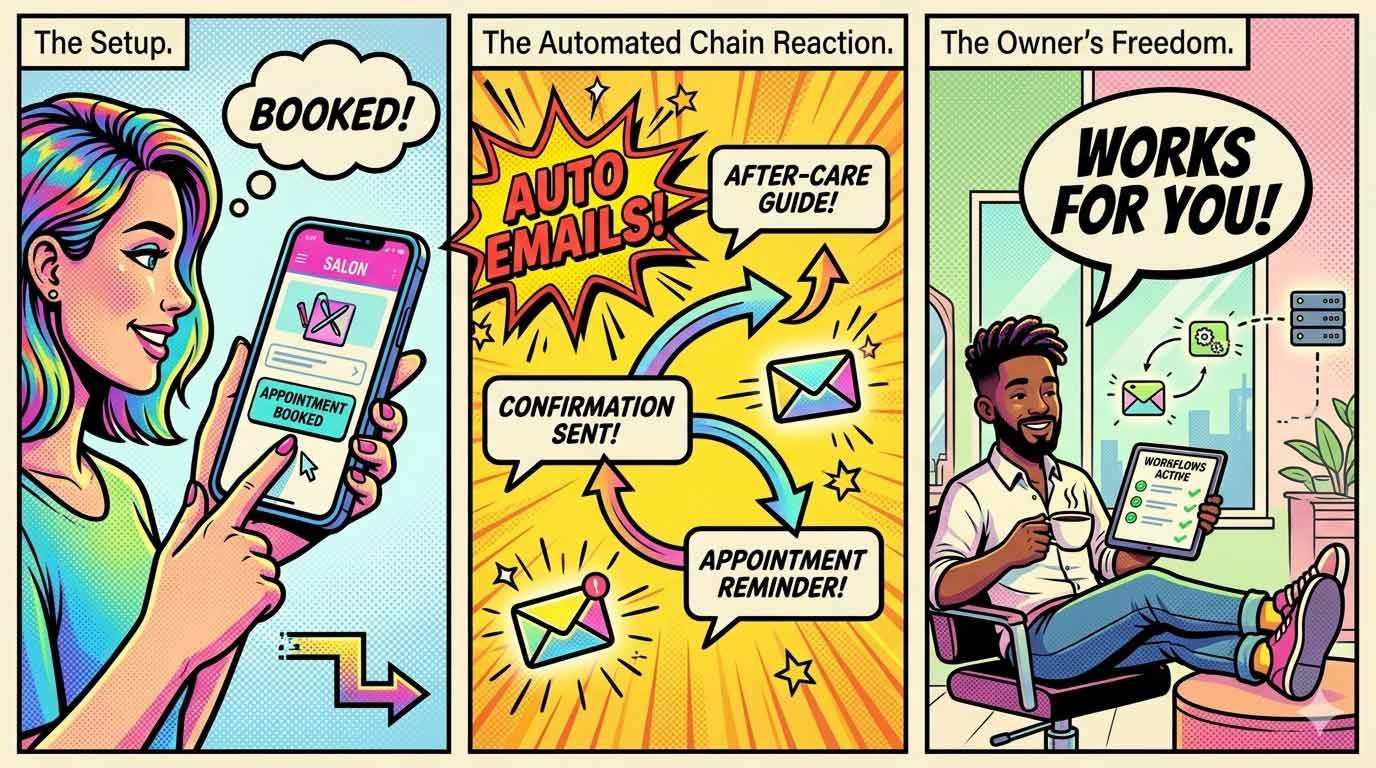
Automation turns email into a revenue engine.
Instead of sending one-off campaigns, create workflows that trigger automatically based on client behavior.
Essential Automated Workflows
1. Welcome Series (3 emails over 14 days)
Introduce your salon, offer a discount, and encourage booking.
2. Rebooking Reminders
Send emails based on service cycles (e.g., 4–6 weeks after a haircut).
3. After-care Emails
Send immediately after appointments with tips and product suggestions.
4. Birthday/Anniversary Emails
Offer exclusive discounts to build loyalty.
5. Win-Back Campaigns
Target inactive clients with special offers.
6. VIP/Loyalty Emails
Reward high-value clients with exclusive perks.
Automation ensures consistent communication without manual effort.
Choosing and Integrating Email Tools
Selecting the right email marketing platform depends on your salon’s size, automation needs, and how well it connects with your existing systems.
Popular tools for salons include:
- Mailchimp is beginner-friendly with ready-made templates, basic automation, and affordable pricing for small teams.
- Klaviyo offers advanced segmentation and personalization, ideal for salons that want deeper customer insights and behavior-based automation.
- Constant Contact is a simple campaign builder with event and promotion tools, suitable for local salon marketing.
- NextCRM is a powerful option for WordPress-based salons that want full control over customer data, email automation, and campaign tracking inside their own site. It combines CRM, email marketing, and automation in one place, making it easier to manage contacts, send targeted campaigns, and track performance without relying on external platforms.
However, email marketing becomes significantly more effective when it is connected to your booking system.
That’s where tools like Salonly come in.
With a booking system integrated into your email marketing workflow, you can:
- Automatically collect customer data during bookings
- Trigger emails based on appointment activity
- Send rebooking reminders at the right time
- Track real revenue generated from email campaigns
For example, when a client books a haircut, your system can automatically trigger the following:
- A confirmation email
- A same-day after-care email
- A rebooking reminder after 4–6 weeks
This kind of automation + booking integration is what turns email marketing from simple newsletters into a revenue-driving system.
Compliance & Deliverability
Email marketing must follow legal guidelines:
CAN-SPAM (US)
- Accurate sender information
- No misleading subject lines
- Clear unsubscribe option
CASL (Canada)
- Requires explicit consent
- Must include identification and unsubscribe
GDPR (EU)
- Requires clear opt-in consent
- Data protection and user rights
Best practices for deliverability:
- Avoid spam words
- Authenticate domains (SPF, DKIM)
- Keep lists clean
- Send consistent campaigns
Seasonal & Evergreen Campaign Ideas
Seasonal campaigns help salons stay relevant throughout the year.
Monthly and seasonal ideas:
- January: New Year transformations
- February: Valentine’s promotions
- Spring: Refresh and renewal offers
- Summer: Vacation-ready services
- Back-to-School: Quick grooming deals
- Fall: Repair and hydration treatments
- Holidays: Black Friday, Christmas bundles
Industry tools like Mangomint and Zenoti highlight how seasonal campaigns increase bookings and engagement.
Evergreen Content Ideas
Balance promotions with value-driven content:
- Haircare and skincare tips
- Product recommendations
- Client success stories
- Staff introductions
- Loyalty program updates
This keeps your audience engaged even outside promotional periods.
Measuring Success & Optimizing Your Campaigns
To improve performance, track key metrics:
- Open rate (target 20–25%+)
- Click-through rate (CTR) (2–3% benchmark)
- Conversion rate (bookings or sales)
- Revenue per email
- Unsubscribe rate
Use these insights to refine your strategy.
Using Analytics for Continuous Improvement
- Run A/B tests on subject lines, CTAs, and timing
- Use UTM tracking to measure bookings
- Analyze which segments convert best
- Continuously optimize campaigns
Small improvements can significantly increase revenue over time.
Integrating Email Marketing with Other Channels
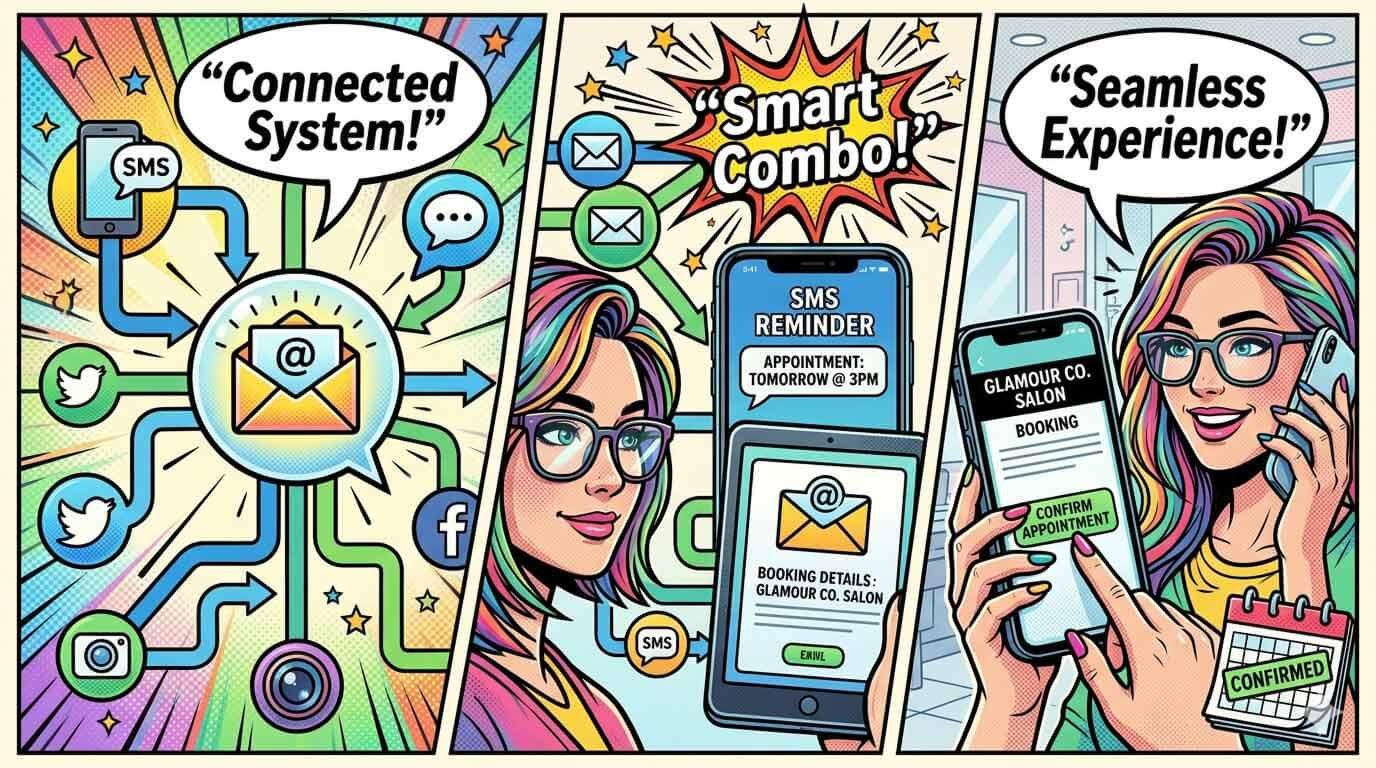
Email works best when combined with other channels, like:
A. Email + SMS: Use SMS for reminders and urgency, and email for details and storytelling.
B. Email + Social Media: Drive followers to your list and retarget visitors.
C. Email + Loyalty Programs: Send rewards, points updates, and exclusive offers.
A connected system creates a seamless client experience.
Conclusion & Next Steps
Email marketing for salon businesses is one of the most powerful and reliable ways to grow. With high ROI, massive global reach, and strong personalization capabilities, it helps salons build lasting client relationships while driving consistent bookings and revenue over time.
To get started, focus on building a quality email list, segmenting your audience based on services and behavior, and setting up simple automated campaigns like welcome emails and rebooking reminders. As you grow, continue optimizing your strategy by testing subject lines, improving content, and analyzing performance data.
For faster and more scalable results, it is important to use an integrated system rather than isolated tools. Platforms like NextCRM can help you manage contacts, automate email campaigns, and track performance directly inside your website, while a booking solution like Salonly ensures that every email is connected to real appointments and customer activity.
When your email marketing and booking system work together, you move beyond basic promotions and create a complete customer journey that drives repeat visits and long-term loyalty.
The sooner you start building this system, the sooner you turn emails into bookings and clients into regulars.