







If you run a salon or spa and use Booksy, you have probably relied on it to manage online bookings, client reminders, and payments. Booksy is a well-known appointment-scheduling platform in the beauty and wellness industry, offering marketplace visibility, marketing tools, and business management features.
However, many salon and spa owners eventually start looking for Booksy alternatives. The reason is simple. As your business grows, you may need more control over branding, clearer pricing without marketplace commissions, deeper reporting, POS integration, or more customizable booking flows.
In this guide, we will explore the best Booksy alternatives for 2026, compare their features, pricing models, and pros and cons, and help you choose the right appointment-scheduling software for your salon or spa.
Why Look Beyond Booksy? Understanding Salon & Spa Needs
Booksy is a well-known appointment-scheduling platform for beauty and wellness professionals. It offers online booking, reminders, marketing tools, and reporting features. According to Business.org, Booksy’s standard plan starts at $29.99 per month, with additional fees for extra team members, which can increase costs for growing salons.
However, many business owners explore alternatives for several reasons:
- Concerns about subscription pricing and add-on costs
- Marketplace exposure where clients may see competing providers
- Limited branding flexibility compared to fully customizable booking pages
- Integration needs with POS, accounting, or marketing tools
- Desire for deeper analytics or workflow customization
Every salon has unique priorities. A solo stylist renting a chair may prioritize affordability and simplicity. A multi-location spa may need advanced reporting, POS integration, and brand control. Understanding these needs is the first step toward selecting the best Booksy alternative.
Hidden Costs & Marketplace Fees
Pricing transparency is one of the most common reasons owners compare Booksy competitors.
- Booksy’s base subscription begins at $29.99 per month, and adding team members increases the total cost.
- Some platforms in the beauty industry operate marketplace models. For example, StyleSeat is known for commission-based or transaction-based pricing structures, which can reduce margins over time.
- Payment processing fees also apply across most platforms, typically ranging between 2.6% and 2.9% + a fixed fee per transaction, depending on the provider.
While marketplace visibility can generate bookings, it may also mean higher long-term costs and less control over customer acquisition.
Control over Branding & Customer Data
Modern salons increasingly want full brand ownership.
Some newer tools, such as Lunacal, emphasize custom domains, branded booking pages, and embedded payment flows rather than marketplace listings. White-label advocates also argue that owning your booking interface strengthens brand loyalty and reduces dependency on third-party directories.
Branding control can include:
- Custom booking URLs
- Removal of third-party branding
- Customizable intake forms
- Full access to client data and reports
For salons focused on building a premium brand, this flexibility matters.
Feature & Integration Gaps
While Booksy offers core scheduling features, some competitors highlight advanced capabilities:
- Calendesk promotes advanced analytics and customizable booking flows.
- Lunacal includes routing forms and flexible intake questions.
- Square Appointments integrates deeply with Square’s POS ecosystem.
For businesses needing complex reporting, retail POS integration, or automated workflows, exploring these alternatives can be worthwhile.
How to Choose the Right Scheduling Tool
Choosing the best salon booking software is not just about price. Industry comparison articles, such as emphasize reviewing several criteria before switching platforms.
Here’s what to evaluate carefully:
- Ease of use
- Payment processing & POS integration
- Automated reminders & notifications
- Client management features
- Mobile accessibility
- Customization & scalability
- Customer support
User Experience & Mobile Friendliness
User experience directly affects booking conversion rates. According to digital marketing research frequently cited in industry blogs, over 64% of global web traffic now comes from mobile devices. That means your booking flow must work seamlessly on smartphones.
Look for:
- Fast mobile loading speeds
- Simple, intuitive booking steps
- Clear service selection and pricing
- Easy rescheduling and cancellation
A clunky interface can reduce client retention.
Payment & POS Integration
Integrated payment systems simplify operations.
For example:
- Square Appointments connects directly with Square POS hardware and payment processing.
- Fresha offers integrated POS and inventory tools.
- GoReminders supports payment tracking alongside appointment reminders.
Check:
- Processing fees
- Deposit functionality
- Retail sales integration
- Hardware compatibility
Disconnected systems often create manual work and accounting errors.
Customization & Scalability
If you plan to expand, scalability matters. Platforms like Calendesk emphasize customizable workflows and integrations. White-label approaches, as suggested by development agencies such as Softservice, provide full control for businesses that want a proprietary booking experience.
Consider:
- Multi-location management
- Staff permissions
- Reporting dashboards
- API or integration flexibility
A solution that works for one stylist may not work for a 15-employee spa.
In-Depth Comparison of Top Booksy Alternatives (2026)
Below is a neutral comparison of leading Booksy competitors frequently referenced in industry research and directories.
Salonly
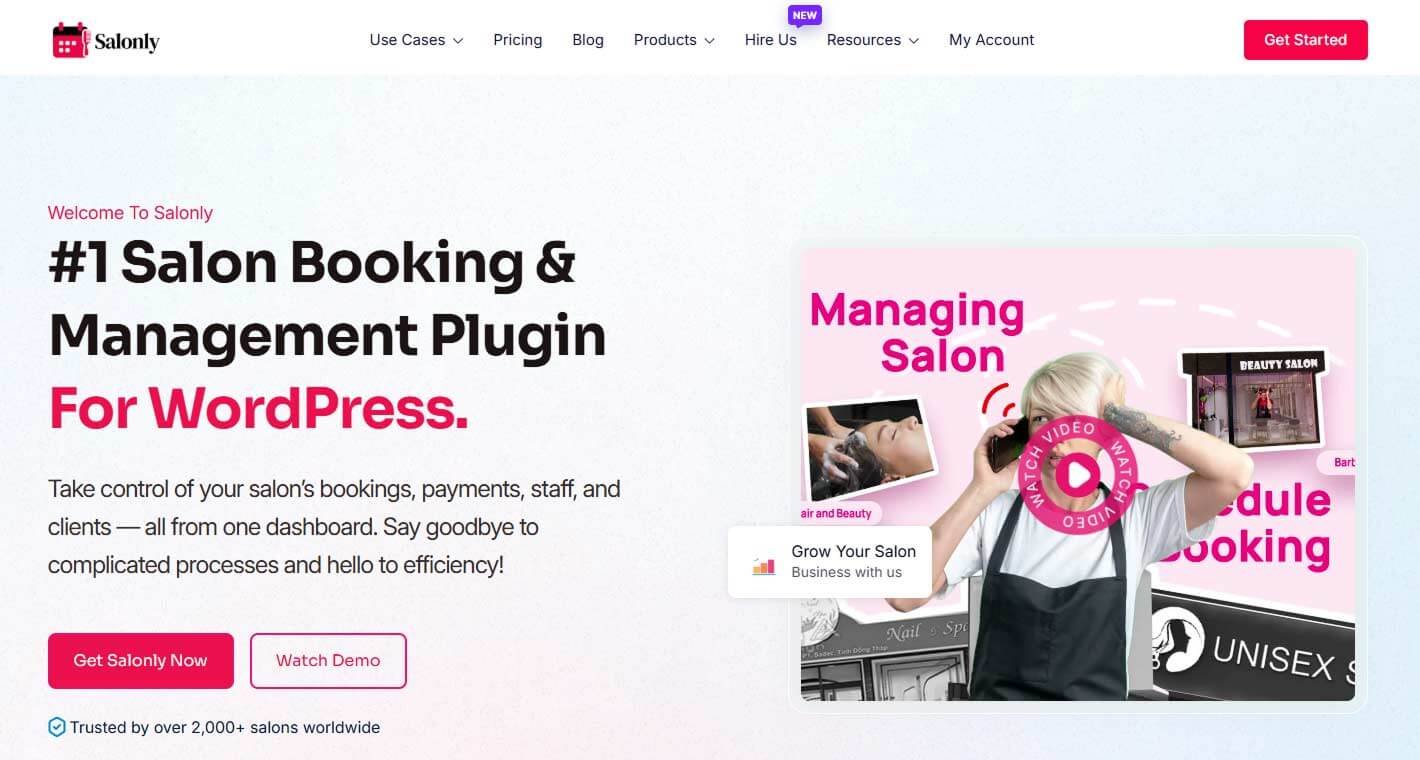
Salonly is a WordPress-based salon booking solution focused on website ownership and operational control.
Best For: Salons that want full control over their website and booking system.
Key Features:
- Branded booking pages
- Deposit and partial payment options
- Staff scheduling management
- Built-in financial reports
Pricing: Typically structured as a plugin license rather than local or commission-based marketplace fees.
Pros:
- Full website ownership
- No marketplace competition
- Strong deposit tracking
Cons:
- Requires WordPress setup
- Less exposure compared to marketplace apps
Integration & Support: Works within the WordPress ecosystem; integrates with payment gateways.
Lunacal
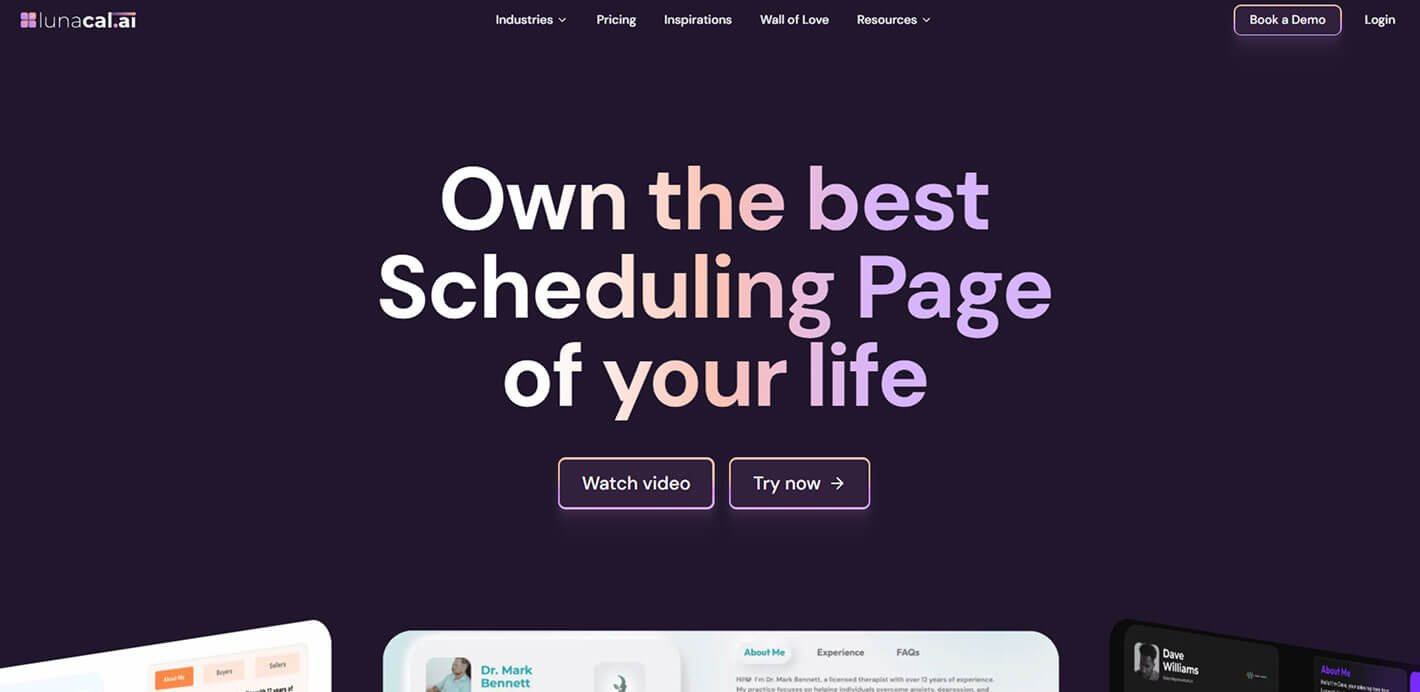
Lunacal positions itself as a flexible alternative with strong branding.
Best For: Professionals who want custom booking pages and payment integration.
Key Features:
- Custom domains
- Embedded booking flows
- Routing forms
- Calendar integrations
Pricing: Tiered pricing; no marketplace commission model.
Pros:
- Strong brand control
- Flexible intake customization
Cons:
- Less established brand than older platforms
Integration & Support: Supports payment gateways and calendar sync.
Fresha
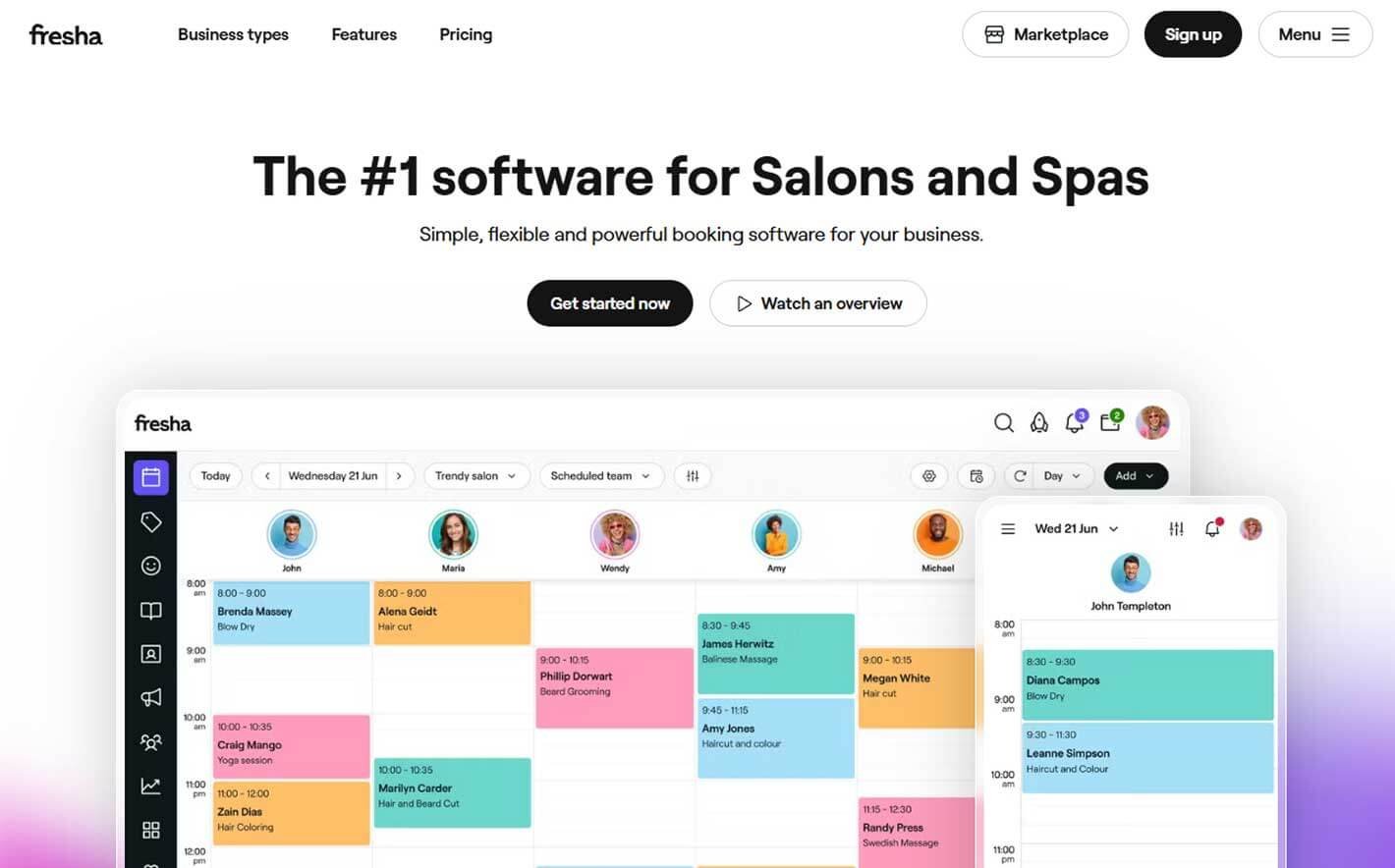
Fresha is widely recognized for its free core scheduling model.
Best For: Salons seeking low upfront costs.
Key Features:
- No monthly subscription for basic use
- POS & inventory management
- Marketing tools
Pricing: Free core plan; transaction fees apply for payments and certain marketing tools.
Pros:
- No fixed monthly subscription
- Built-in POS
Cons:
- Transaction fees can accumulate
- Limited custom branding compared to white-label tools
Integration & Support: Offers integrated payments and business tools.
Square Appointments
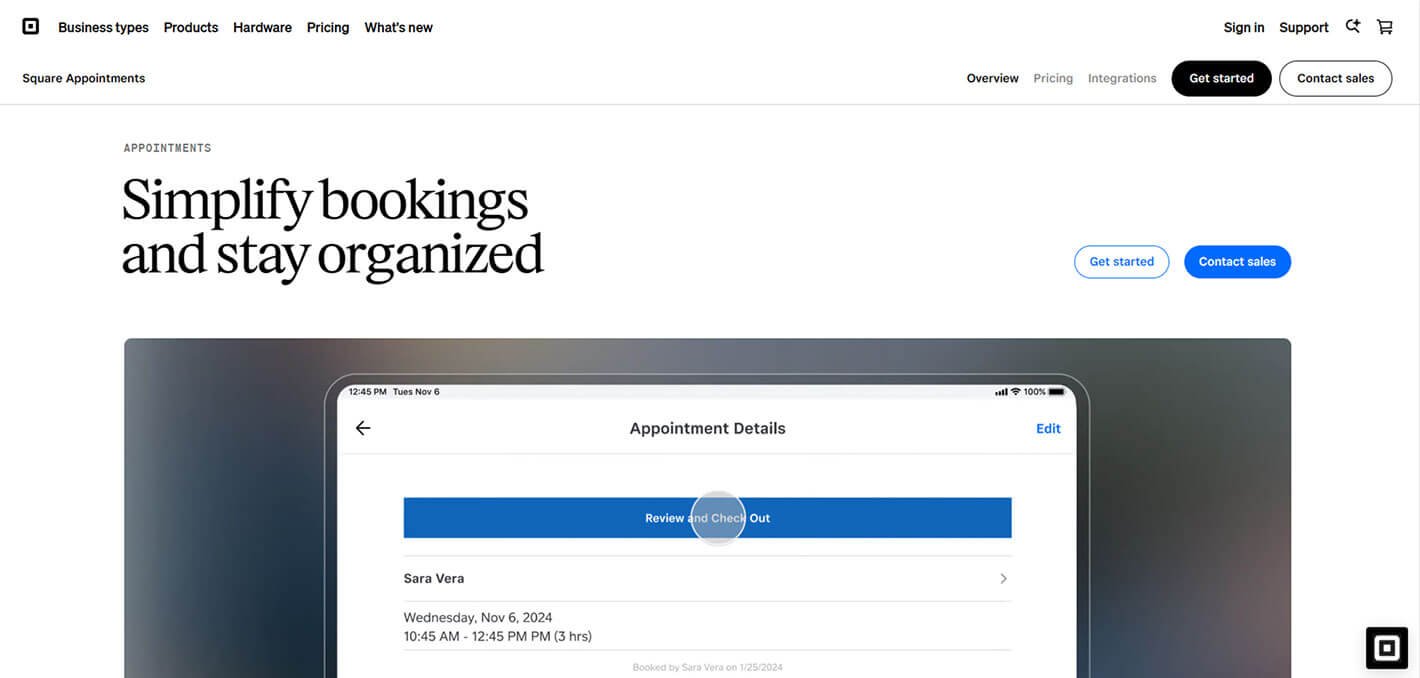
Square Appointments integrates seamlessly with Square’s POS ecosystem.
Best For: Businesses already using Square.
Key Features:
- Free plan for solo providers
- POS hardware integration
- Automated reminders
Pricing: Free for individuals; paid tiers for teams and multi-location setups.
Pros:
- Transparent pricing
- Strong POS ecosystem
Cons:
- Customization may be limited
- Advanced features require paid plans
Integration & Support: Deep integration with Square payments and hardware.
Vagaro
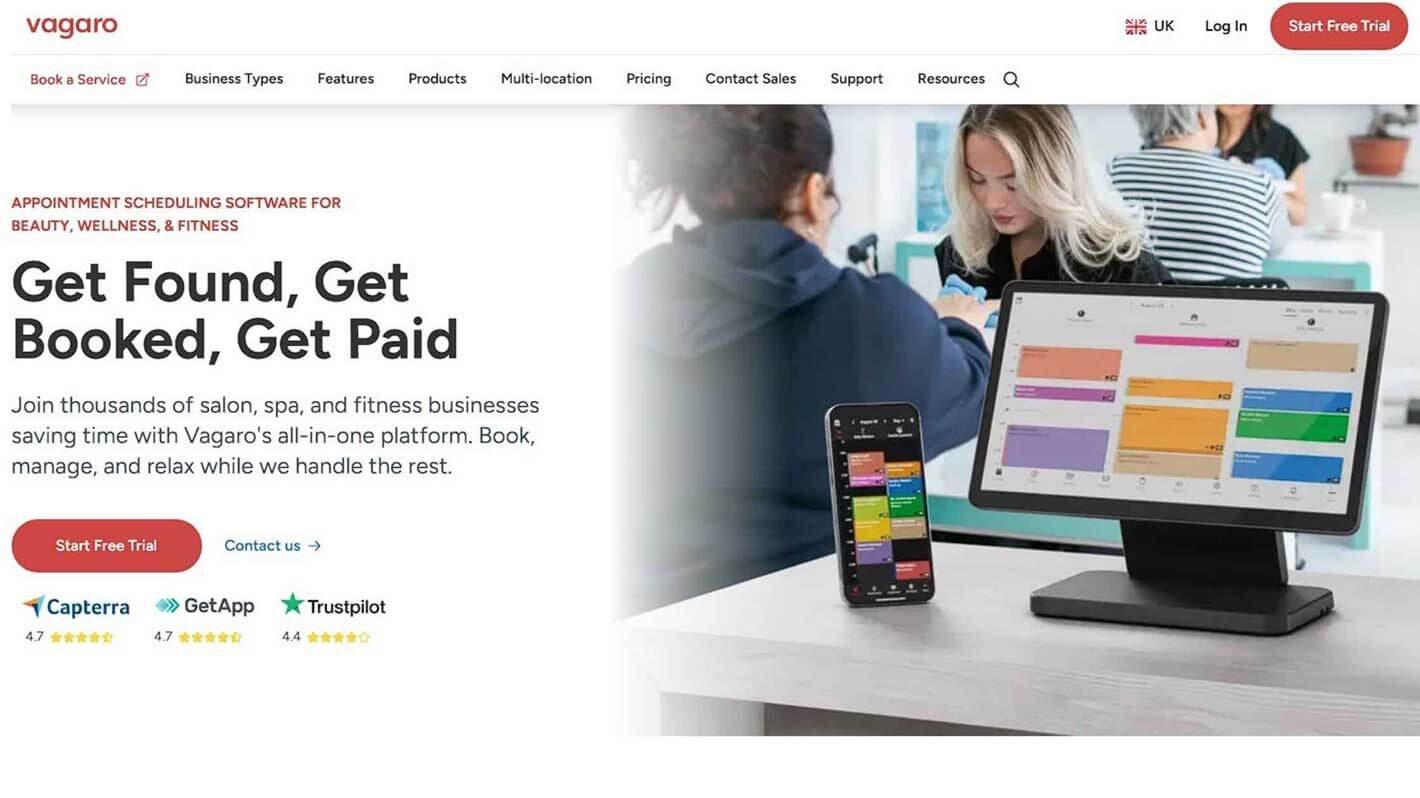
Vagaro is a comprehensive salon and spa management platform.
Best For: Multi-service salons and wellness centers.
Key Features:
- Online booking
- Marketing automation
- Payroll & reporting
- Marketplace exposure
Pricing: Tiered subscription model; pricing increases with features and users.
Pros:
- Feature-rich
- Strong marketing tools
Cons:
- The interface can feel complex
- Costs increase as the business scales
Integration & Support: Supports POS and various add-ons.
GlossGenius / StyleSeat
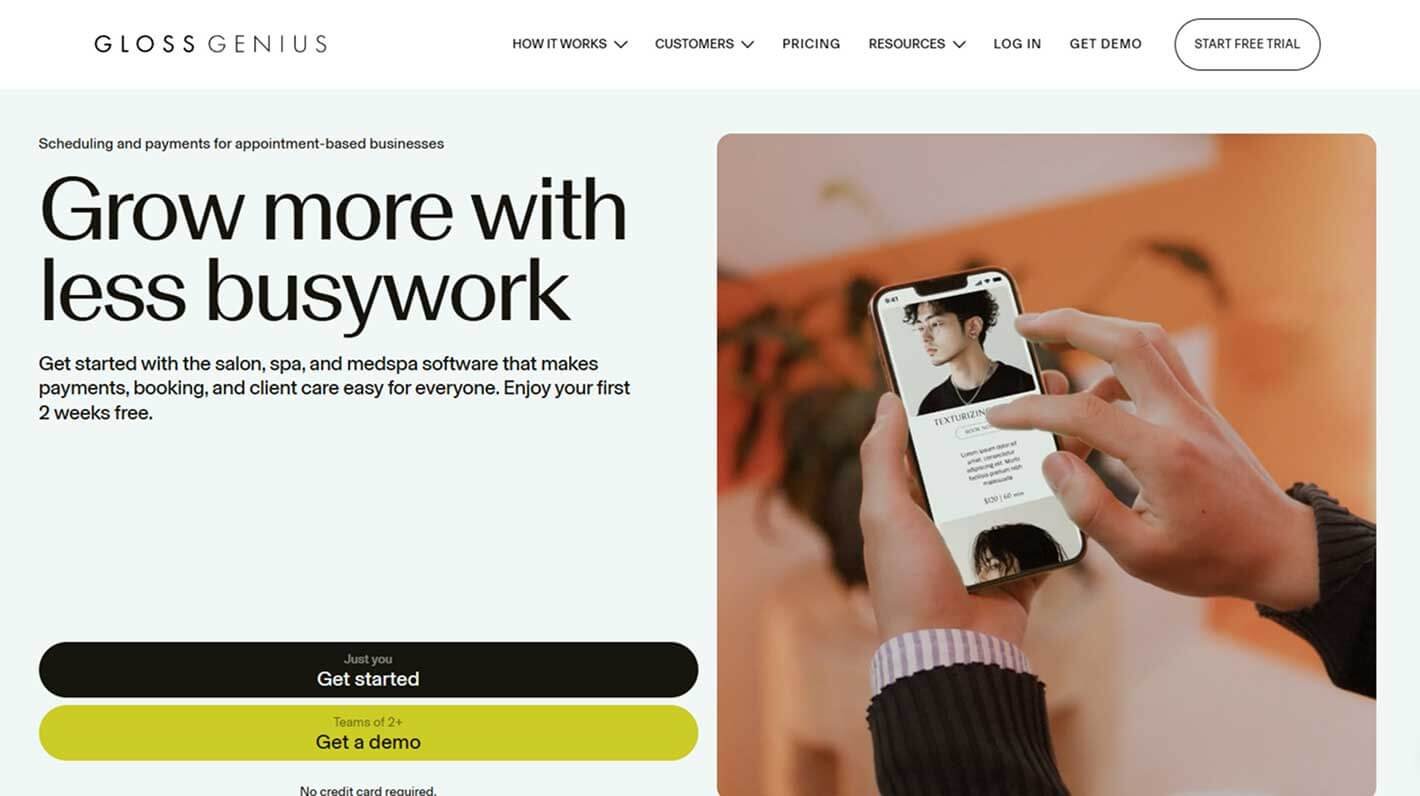
Both platforms place a heavy focus on independent stylists.
GlossGenius Best For: Solo stylists wanting sleek mobile interfaces.
StyleSeat Best For: Professionals seeking marketplace discovery.
Key Features:
- Mobile-first design (GlossGenius)
- Marketplace exposure (StyleSeat)
- Payment processing
- Client reminders
Pros:
- Easy setup
- Strong for independent providers
Cons:
- Limited deep customization
- Marketplace commission (StyleSeat)
Calendesk
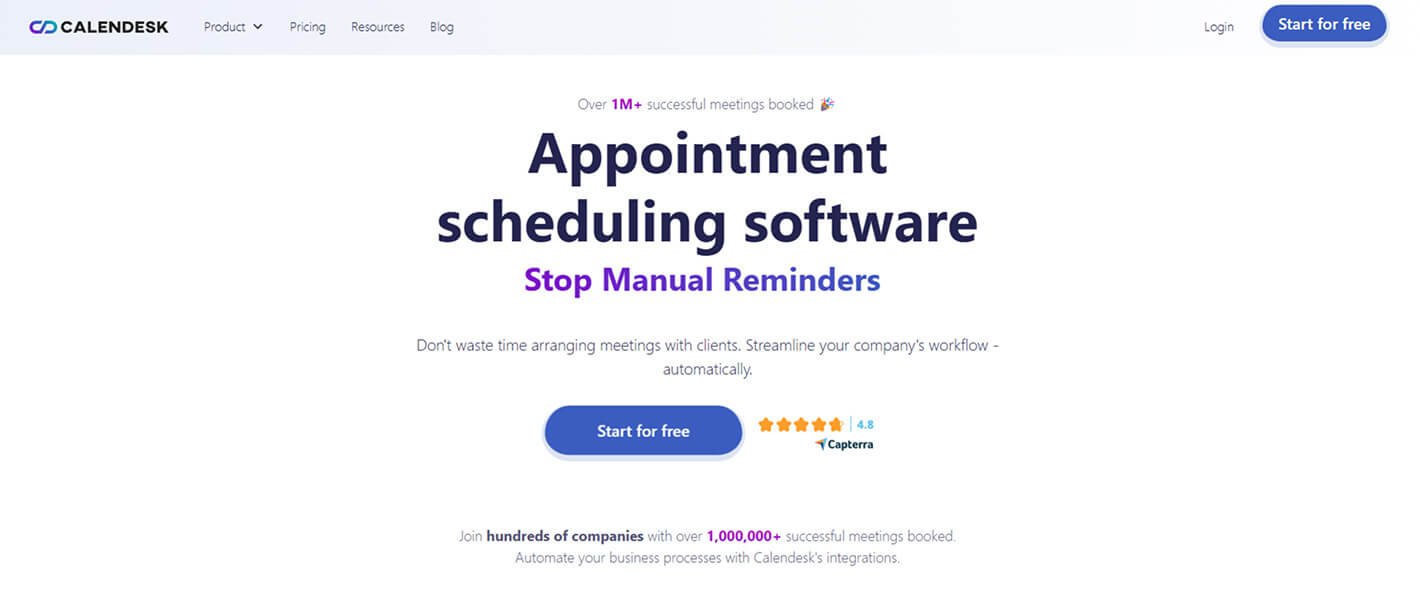
Calendesk promotes customizable booking flows and analytics.
Best For: Subscription-based or service-heavy businesses.
Key Features:
- Advanced analytics
- Custom booking forms
- Integrations
Pricing: Tiered subscription model.
Pros:
- Flexible workflows
- Reporting capabilities
Cons:
- Less widely known in the salon niche
White-Label & Custom Solutions
Development agencies argue that the ultimate alternative is a custom booking platform.
Best suited for:
- Large multi-location brands
- Franchises
- Salons wanting full technology ownership
Pros:
- Total control
- No marketplace commissions
Cons:
- Higher upfront development cost
- Ongoing maintenance responsibility
Side-by-Side Comparison Table
| Platform | Starting Cost | Marketplace Model | POS Integration | Best For | Key Limitation |
| Booksy | $29.99/month | Yes | Yes | Growing salons | Cost scales with team |
| Salonly | License-based | No | Yes (gateway-based) | WordPress salons | Requires website setup |
| Lunacal | Tiered | No | Yes | Brand-focused pros | Newer platform |
| Fresha | Free core | Partial | Yes | Budget salons | Transaction fees |
| Square | Free solo | No | Native Square | Square users | Limited branding |
| Vagaro | Tiered | Yes | Yes | Larger spas | Cost escalation |
| GlossGenius | Tiered | No | Yes | Solo stylists | Limited scalability |
| Calendesk | Tiered | No | Yes | Custom workflows | Smaller salon footprint |
Additional Tips for Transitioning from Booksy
Switching scheduling software requires planning.
- Use free trials before committing.
- Test booking flows for both providers and clients.
- Confirm data export options for client lists and history.
- Evaluate customer support responsiveness.
- Train staff before full rollout.
Avoid abrupt transitions that disrupt client booking experiences.
Frequently Asked Questions
Is Booksy free for salons?
No. Booksy typically starts at $29.99 per month, with additional charges for team members and certain features.
What are the hidden fees in salon booking software?
Hidden fees in salon booking software often go beyond the advertised monthly subscription. In addition to the base price, many platforms charge payment processing fees, marketplace commissions, marketing boost fees for increased visibility, and extra costs for premium features such as advanced reporting or SMS automation. These additional charges can increase the total monthly expense, so it is important to review official pricing pages carefully before committing.
Which alternative is best for solo stylists?
For solo stylists, the best alternative depends on budget and workflow needs. Square Appointments is popular because it offers a free plan for individuals and integrates with Square POS. GlossGenius appeals to independent professionals with its mobile-friendly design, while Fresha attracts users with its no-monthly-fee core model, though transaction fees apply.
Can I build my own booking system?
Yes. White-label or custom solutions allow full brand control but require higher upfront investment.
Conclusion: Finding Your Perfect Fit
There is no single “best” Booksy alternative for every salon or spa. The right scheduling software depends on your budget, team size, branding priorities, integration needs, and long-term growth plans. A solo stylist renting a chair will have very different needs compared to a multi-location salon managing multiple service categories, retail inventory, and staff payroll.
If you prioritize full website ownership and stronger brand control, a WordPress-based solution like Salonly or a white-label booking system can give you more independence and eliminate marketplace competition. When your goal is built-in exposure and discovery within a booking marketplace, platforms such as Vagaro or StyleSeat may be suitable. If seamless POS integration and transparent payment processing matter most, Square Appointments or Fresha can be strong options, especially for businesses already using their ecosystems.
Before making a final decision, test multiple platforms through free trials and carefully calculate long-term costs, including transaction fees and add-ons. Look beyond the monthly subscription price and evaluate scalability, reporting capabilities, and the quality of customer support. The best appointment-scheduling software is not just the one with the most features but the one that supports your salon’s operational efficiency and brand positioning over time. In addition to choosing the right booking tool, salons should strengthen their overall marketing strategy. A reliable system works best when combined with clear marketing fundamentals.